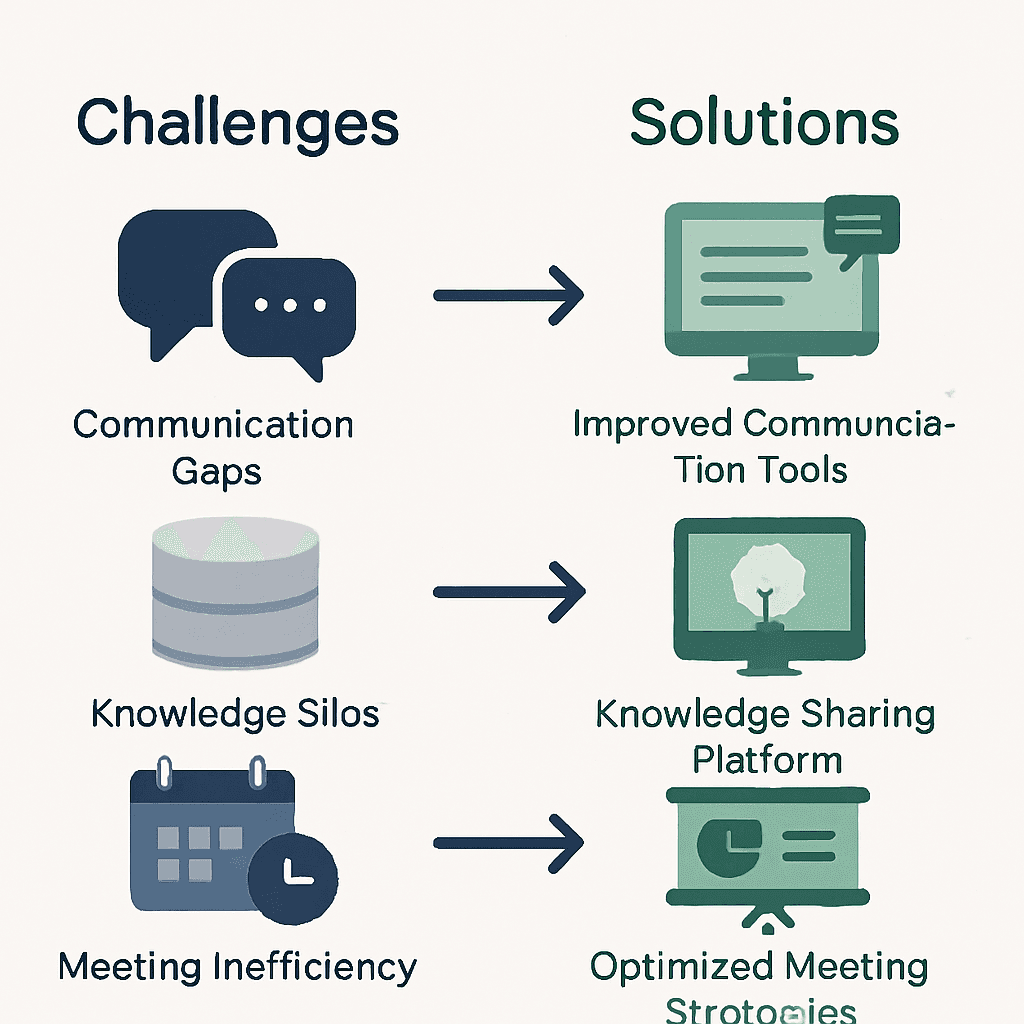
The Ultimate Guide to Agile Collaboration for High-Performing Dev Teams | 2025 Best Practices
 Regine CyrilleWorkforce01 May 2025
Due to the growing advancement of technology, development teams face unprecedented challenges. Some include distributed workforces, accelerating delivery expectations, and increasingly complex technical requirements.
Within this environment, the ability to collaborate effectively has emerged as perhaps the most important differentiator between teams that consistently deliver exceptional results and those that struggle to meet objectives.
The most successful organizations recognize that agile collaboration is not merely about implementing a particular methodology or toolset, but equally cultivating a comprehensive ecosystem where information flows freely, team members are empowered to contribute their best work, and collective intelligence drives innovation.
This holistic approach to collaboration creates compounding advantages beyond simple productivity metrics, enabling teams to adapt quickly to changing requirements while maintaining high-quality standards.
An extensive research across hundreds of development teams reveals that organizations that excel at collaborative practices deliver software 37% faster than their peers while experiencing 29% fewer critical bugs.
These high-performing teams are also significantly more likely to report high job satisfaction and demonstrate better retention rates in a competitive talent market.
This comprehensive guide explores the proven strategies, frameworks, and practices that enable exceptional collaborative performance among development teams.
Drawing on both established research and emerging best practices, we provide actionable insights that organizations can implement to transform their development processes and outcomes.

The Evolution of Agile Collaboration
The concept of agile collaboration has undergone significant evolution since the publication of the Agile Manifesto in 2001. What began as a set of principles primarily focused on software development has expanded into a broader philosophy that influences organizational structures, team dynamics, and business strategies.
The early days of agile emphasized co-located teams working in intense, synchronized sprints, with physical tools like task boards and daily stand-ups facilitating information sharing. This model proved highly effective for teams that could work in the same physical space, demonstrating that transparency, frequent communication, and shared ownership of outcomes could dramatically improve productivity and quality.
As organizations expanded globally and technology enabled more distributed work arrangements, agile practices needed to adapt. The mid-2010s saw the emergence of distributed agile teams that maintained core principles while leveraging digital tools to overcome geographical separation. Video conferencing, digital kanban boards, and persistent chat platforms became essential infrastructure for teams split across multiple locations.
The COVID-19 pandemic accelerated this evolution dramatically, forcing even traditionally co-located teams to adapt to fully remote collaboration virtually overnight. This global experiment in remote work revealed that many collaborative practices could function effectively in distributed environments, though not without intentional adaptation and thoughtful implementation of supporting technologies.
Today, we find ourselves in an era of hybrid agile collaboration, where teams blend physical and virtual presence in fluid configurations. The most successful organizations have moved beyond simply replicating in-person practices online, instead rethinking their entire collaborative approach to leverage the unique advantages of both modalities while mitigating their respective limitations.
Throughout this evolution, certain foundational principles have remained constant: the focus on delivering customer value, embracing change as inevitable, preferring working solutions over comprehensive documentation, and prioritizing human interactions.
However, implementing these principles has become increasingly sophisticated, with organizations developing nuanced approaches that reflect their needs, culture, and working environments.
Latest From Our Blog
Discover fresh insights, trends, and tips on tech talent and offshore development. Stay informed with our latest updates