One-Way Interviews: The Candidate's Guide to Standing Out on Camera
 Regine CyrilleHuman Resource21 Jul 2026
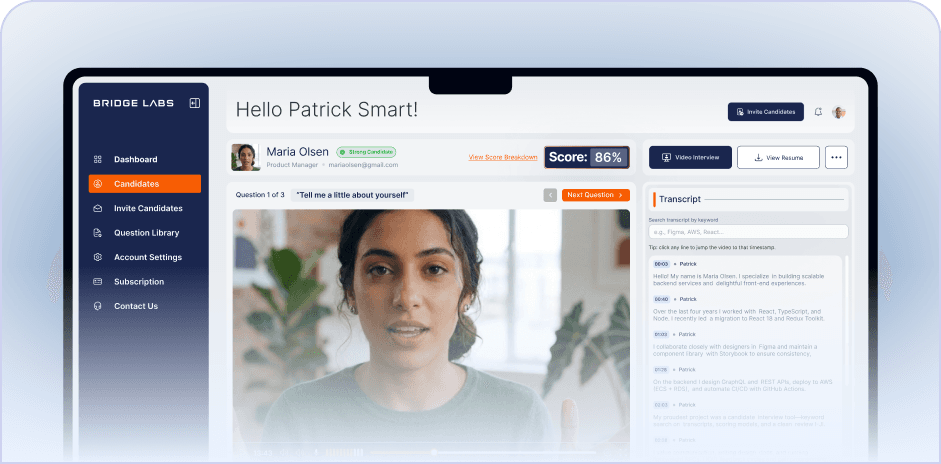
More companies are using one-way video interviews as a first-round screen.
You get a set of questions, hit record, and answer on your own time with no interviewer on the other end.
It feels strange the first time or just unfamiliar.
So here is how to actually do well at it:
1. Look at the lens, not the screen
Your instinct will be to watch your own face on the screen while you talk. Do not. Look directly into the camera lens instead.
It feels unnatural for the first few tries, but it is the single biggest difference between an answer that feels like eye contact and one that feels like you are talking past the reviewer.
While you are at it, raise your camera to eye level. Stack some books under your laptop if you need to. A camera angled up your nose is not the first impression you want.
2. Do not over-correct into a robot
This is the most common mistake. Candidates get so focused on not messing up that they flatten their tone and strip out all the personality that would have made them memorable.
Talk at a normal, conversational pace. Let your tone move around the way it would in a real conversation. The reviewer is trying to get a sense of who you are, not just what you say.
3. Fix your audio before your lighting
Bad audio kills more interviews than bad lighting. If you have wired earbuds with a mic, use them as they usually beat a laptop's built-in microphone by a wide margin.
For lighting, sit facing a window or lamp, not with it behind you. Backlighting turns you into a silhouette. A plain wall or a tidy bookshelf works better than a cluttered room in the background.
4. Dress like it is a real interview
Because it infact is, so dress the way you would for an in-person interview. Solid colors read better on camera than busy patterns or fine stripes.
5. Use your prep time to plan, not to script
Most one-way interview tools give you a short window to think before you record. Use it to land on your main point, pick the one example that proves it, and decide how you will close, not to write out a script you will read word for word.
Scripted answers sound scripted. A structured but natural answer beats a polished but stiff one every time.
Keep your answers specific. "I improved our onboarding process" is forgettable. "I cut new-hire ramp time from six weeks to four by rebuilding our onboarding checklist" gives the reviewer something to remember.
6. Bring the real you
The content of your answers matters most, but personality is not a distraction from that — it is part of it. If the reviewer finishes your recording with a sense of who you are, not just what you have done, you are ahead of most candidates.
7. Follow up
Send a short thank-you note within 24 hours of finishing your interview. It is a small step, and most candidates skip it. That alone makes you stand out.
A friendly note for you:
A one-way interview is not a hoop to jump through. It is your first real shot at making an impression, minus the pressure of a live back-and-forth. Treat the setup seriously, keep your delivery natural, and let your answers do the work. (:
Latest From Our Blog
Discover fresh insights, trends, and tips on tech talent and offshore development. Stay informed with our latest updates