5 Proven Strategies for Integrating Remote Developers
 Meli ImeldaWorkforce04 Mar 2025
Remote teams are the future of work, and hiring developers worldwide is now easier than ever. However, integrating new developers into a remote team comes with challenges—miscommunication, lack of alignment, and lack of engagement can slow productivity. Research shows that 36% of remote workers found their onboarding process confusing, making it clear that companies must create a structured approach to integrating new hires effectively.
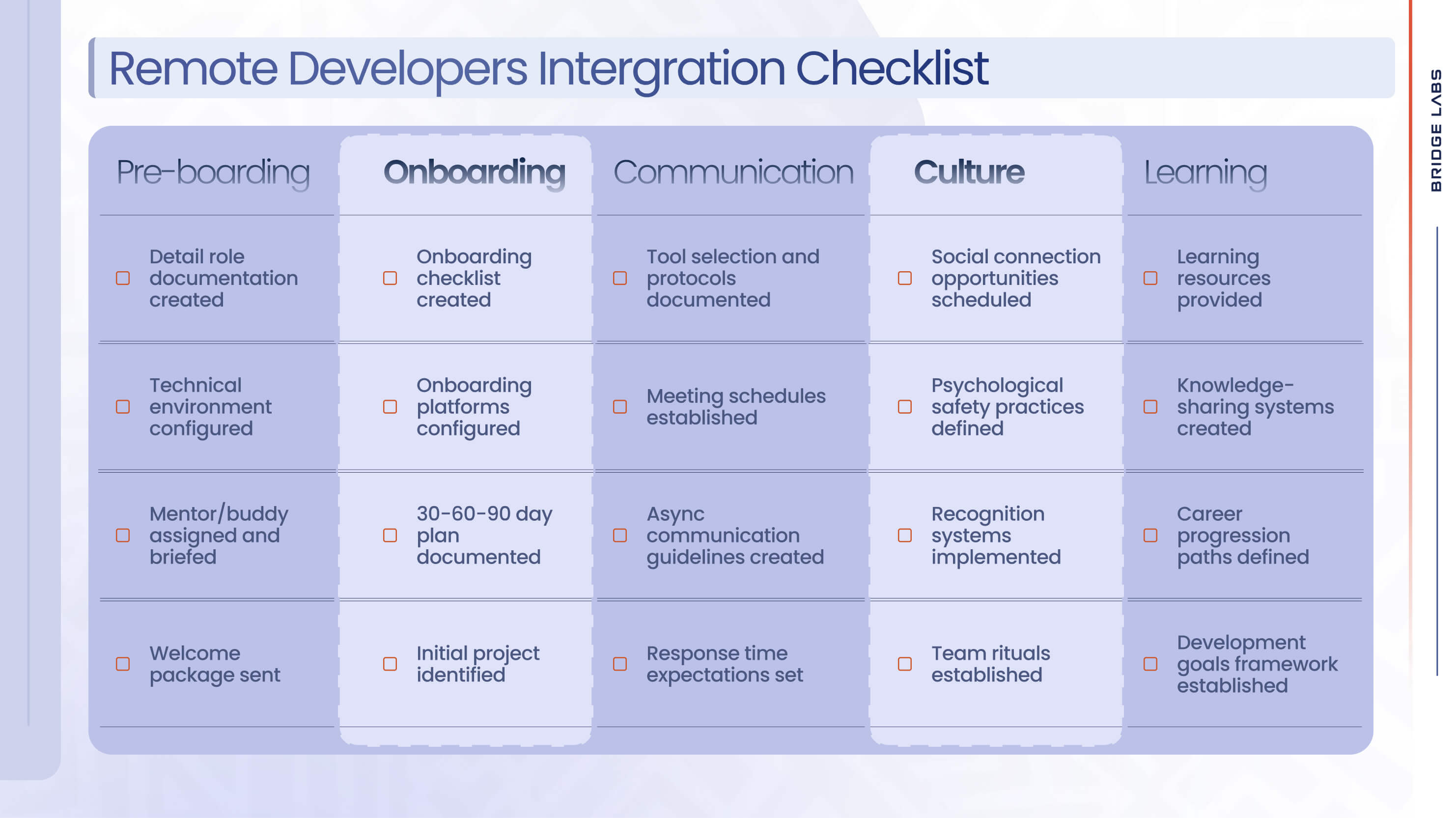
To ensure a smooth transition, companies must focus on five key areas: preparation, onboarding, communication, culture, and continuous learning.
This article will walk you through each step, offering practical strategies for a successful integration.
Outline:
1. Preparation
1. Preparation: Setting the Foundation for Success
86% of employees and executives blame poor communication and lack of collaboration for workplace failures
Many companies fail to set up their new developers for success before starting. New hires can feel lost and disengaged without clear role definitions, access to necessary tools, and established expectations.
Best Practices
a. Define Roles with Crystal Clarity
Before your new developer joins, provide a comprehensive job description that includes:
- Primary project responsibilities
- Technical expectations
- Team interaction guidelines
- Success metrics for the first 30/60/90 days
b. Pre-Configure Technical Environment
Before day one, ensure you've set up:
- Email and communication accounts
- Software licenses and subscriptions
- Repository access with appropriate permissions
- Development environments with necessary configs
- Documentation access
c. Implement the Buddy System
Assign each new developer a dedicated mentor who:
- Has 2+ years of experience with your codebase
- Blocks 30 minutes daily for the first two weeks for questions
- Provides cultural context beyond technical guidance
Being proactive in the pre-boarding phase eliminates friction, reduces stress, and ensures new developers can contribute quickly. Companies that properly prepare see higher productivity rates in the first 90 days of a new hire's employment.
Latest From Our Blog
Discover fresh insights, trends, and tips on tech talent and offshore development. Stay informed with our latest updates